The « Gilliéron » bull's-head rhyton
Plaster cast of a Minoan libation vase, produced by the Émile Gilliéron firm in the early 20th century
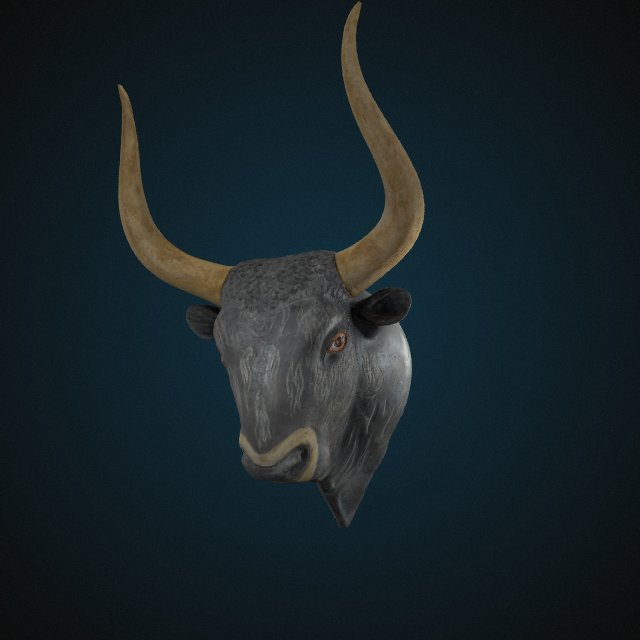
Plaster cast of a Minoan libation vase, produced by the Émile Gilliéron firm in the early 20th century
Global Characteristics
Title:
The « Gilliéron » bull's-head rhyton
Sculptor:
Émile Gilliéron and son
Origin and Date:
Athens, between 1905 and 1910
Dimensions:
H. 44 cm ; W. 26 cm ; D. 21 cm
Materials:
Plaster cast with metal armature for the horns, patinated and gold-leafed. Glass paste for the eyes.
Collection:
Musée d'Archéologie Nationale — « History of Archaeology » collection
Inventory number:
MAN 53347
Description
In 1910, the Musée d'Archéologie Nationale acquired a copy of a vase shaped like a bull's head known as the « Rhyton of Knossos ». Famous at the time, the original libation vase was discovered by the celebrated archaeologist Sir Arthur Evans during the excavation campaigns on this Cretan site, particularly between 1900 and 1905.
This acquisition was not an isolated one: the replica is part of a set of 87 facsimiles reproducing Mycenaean and Minoan objects purchased by the museum between 1894 and 1929. These prestigious copies were produced by the firm of Émile Gilliéron, father and son — exceptional artists and craftsmen who helped disseminate a certain aesthetic of Antiquity.
The original bull's-head rhyton of Knossos is now held at the Heraklion Archaeological Museum (Crete). Dating from between 1600 and 1450 BC, it is a remarkable example of stone sculpture from the Neopalatial period of Crete. The rhyton is carved from a single block of black steatite, while the eyes and muzzle are inlaid with rock crystal, red jasper and shell.
© Musée d'Archéologie Nationale