Bone terminal from a temple ring
Bone terminal from a temple ring, dated from the 9th-10th century
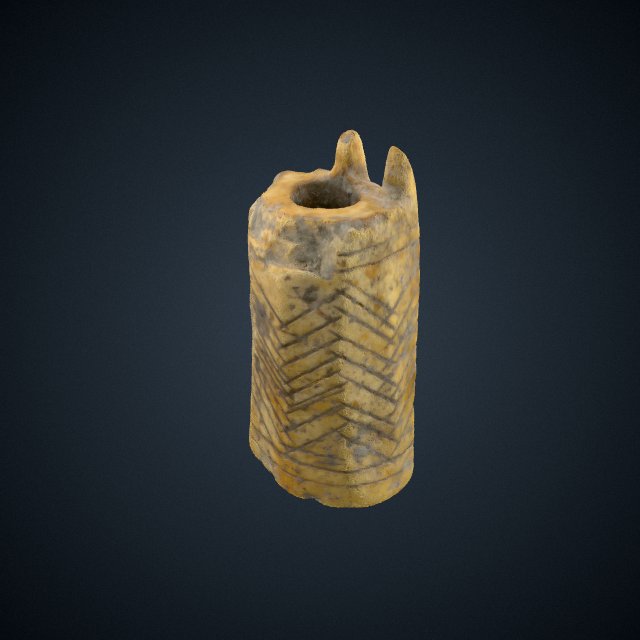
Bone terminal from a temple ring, dated from the 9th-10th century
Global Characteristics
Title:
Bone terminal from a temple ring
Place of discovery:
Loon-Plage, Hauts-de-France, France
Date:
Early Middle Ages (9th-10th century)
Dimensions:
5cm height, 3cm width
Materials:
Bovine bone
Description
Textile production is the most widely attested craft activity in Carolingian settlements of the coastal plain. The region was favourable to the production of sheep's whool and vegetal fibres, including flax and hemp.
This bovine bone temple ring terminal is a tool used in weaving. Employed in pairs, they are mounted on either side of a wooden rod. The terminals are inserted into the selvedge of the textile, thereby maintaining the tension and width of the fabric.
Once spun, the fibre is woven into textiles for the production of clothing. It may also be plaited into ropes or cords used in fishing activities.
© Pauline Lhommel, Inrap