Clay tobacco pipe
Clay tobacco pipe, dated from the 17th-18th century
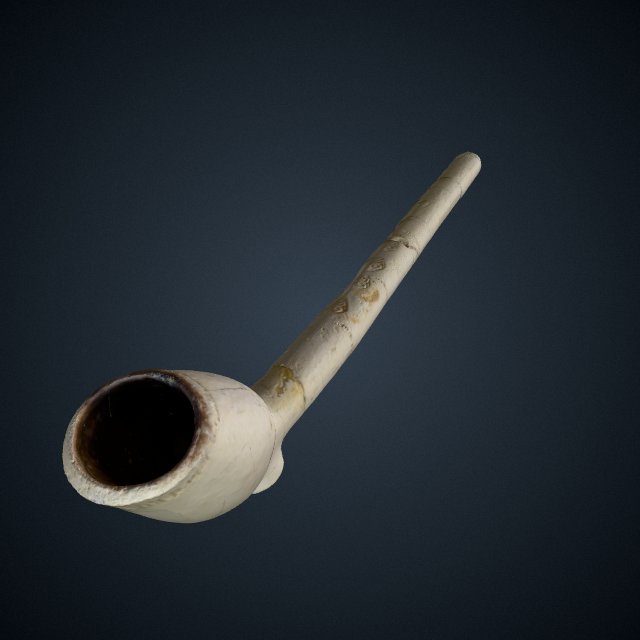
Clay tobacco pipe, dated from the 17th-18th century
Global Characteristics
Title:
Clay tobacco pipe
Place of discovery:
Saint-Georges-sur-l'Aa, Hauts-de-France, France
Date:
Modern Era (17th-18th century)
Dimensions:
21cm width
Materials:
Clay
Description
The clay tobacco pipe industry emerged in England in the late 16th century. In France, production centers were established notably in Dieppe and Dunkirk.
Dunkirk, the main center of production in France, prospered through the tobacco trade, which was facilitated by its free-port status.
During this era, tobacco was first used for medicinal purposes. Pipe smoking was mainly associated with soldiers, sailors, and the lower classes before spreading more broadly across society.
This white clay tobacco pipe is decorated with four fleurs-de-lis and bears the stamped initials "TP".
Although its workshop remains unknown, it may have been produced in Dunkirk, where some pipes were decorated with royal arms or fleurs-de-lis.
© Yves Dal Canton, Inrap