eCorpus events and projects
eCorpus developpement and promotion is gradually becoming part of the mission of a 3D Competence Center founded by University of Lille and Holusion. The official launch is planned for the first quarter of 2026, with the goal of supporting eCorpus development, providing training in photogrammetry, and helping institutions digitize cultural and scientific heritage.
Here's a closer look at four projects and events we took part in at the end of 2025.
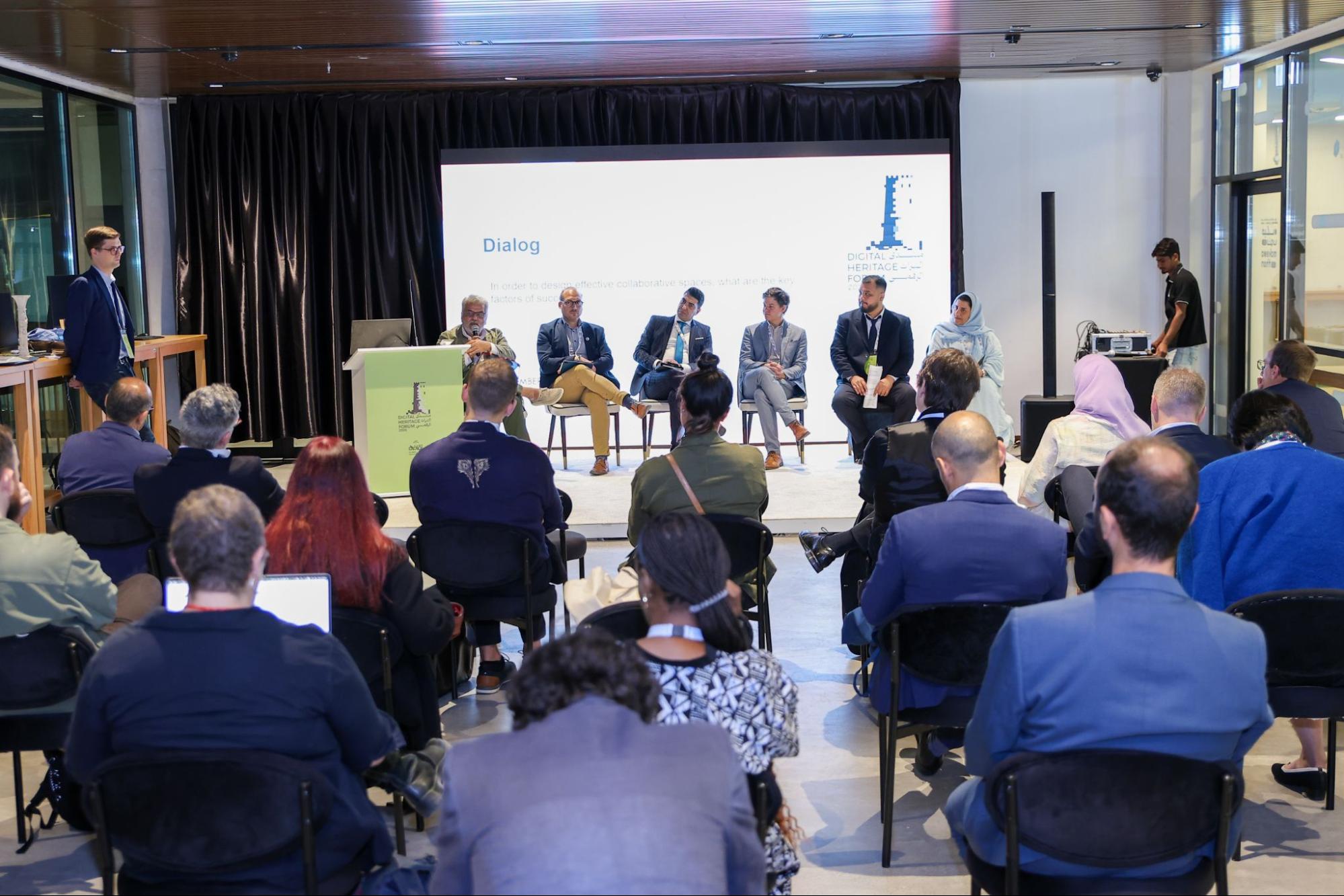
Digital Heritage Forum, Abu Dhabi
We were invited to the very first Digital Heritage Forum in the United Arab Emirates, held November 3–5, 2025, to host a roundtable on collaborative digital spaces. With six speakers from Europe, Africa, and Asia, our goal was to highlight the key challenges around 3D data for heritage—especially in an international context where researchers, governments, institutions, local communities, and NGOs often come together with sometimes diverging goals.
Photogrammetry training at Le Fresnoy
In collaboration with CNRS and the Science and Visual Culture Research Federation, we led our first training session on photogrammetry and using eCorpus. The workshop took place as part of PEPR ICCARE, an ambitious research program bringing together academic labs and the Cultural and Creative Industries. Designed for researchers and collection specialists, the training was held under real-world conditions thanks to the participation of the museum La Piscine in Roubaix.
The program covered photogrammetry theory, free and open-source software for 3D reconstruction, studio photography, and on-site capture in exhibition galleries. All participants were then able to upload their work to an eCorpus database to enrich and share it.
A second training session will take place in 2026.
Secondary education and fine crafts
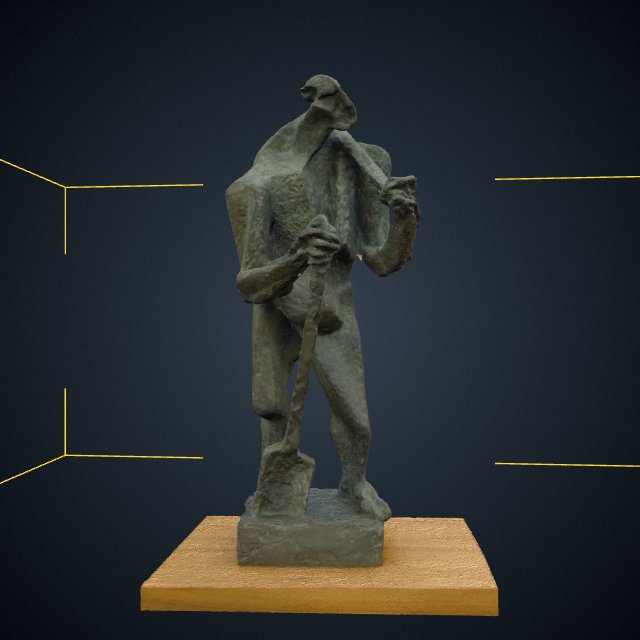
In the Hauts-de-France region, the Villa Médicis project was launched on November 13 at the Louvre-Lens museum, in the presence of Xavier Bertrand, the President of the region. Ten schools offering vocational training in fine crafts will create masterworks to be showcased during an artistic residency at the iconic Villa Médicis in Rome in spring 2026.
To preserve a digital record of these works, the region will use eCorpus to digitize, enrich, and share 3D models of woodworking, stone carving, ornamental ironwork, and other creations by these young talents.
PEPR ICCARE Day
On December 16, the Musée de l'Hospice Comtesse in Lille hosted an acceleration day focused on immersive technologies for heritage and museums. Automated 3D scanning studios, 3D reproduction, holograms, mediation tools—our aim was to showcase the many facets of 3D digitization and highlight the importance of proper documentation and long-term preservation.
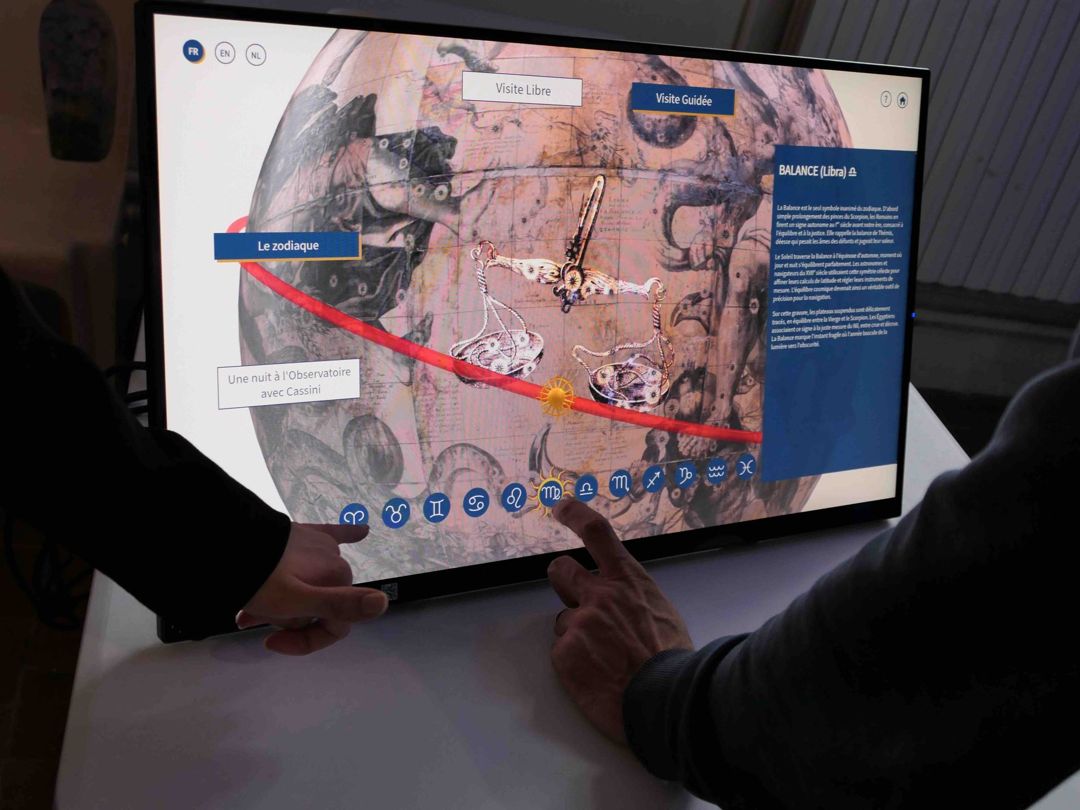
A mediation application for the Coronelli globes, developped using eCorpus, was unveiled at the event. Its installation in the museum galleries is planned for later this year, allowing visitors to explore both the celestial and the terrestrial in detail.
See your objects in a whole new light
In recent versions of Voyager, lighting management has been improved. Lights can now be edited directly in Voyager, and environment lighting (HDRi) is now the default setup for new scenes.
A new tutorial is now available to walk you through the default lighting options and help you create custom lighting setups:
User permissions in eCorpus
The user management documentation page now includes a summary table outlining permissions based on each user's role on an eCorpus server.
More news and what's next
Arabic has been added to Voyager by the Smithsonian. At the same time, we've been working on extending Voyager's API. These new features open up exciting possibilities for creating mediation tools like those presented during the PEPR ICCARE Day.
Behind the scenes, we're also working on automating 3D model processing during import into eCorpus.